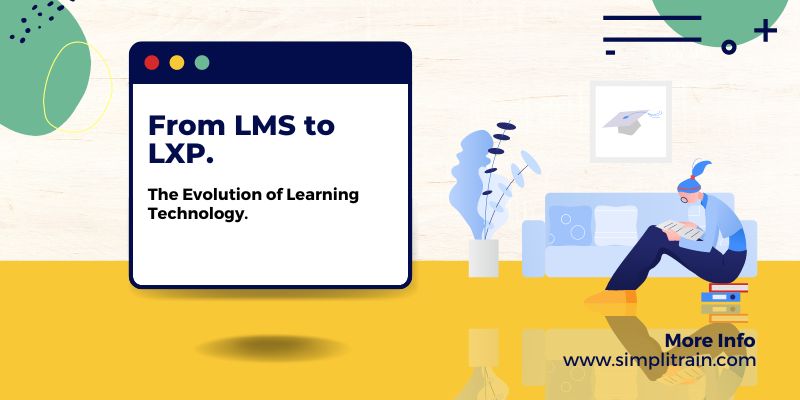





The standard story about corporate learning technology goes like this: Learning Management Systems (LMS) came first, focused on administration and compliance, and then Learning Experience Platforms (LXP) arrived to fix their limitations with personalization and engagement. It’s a clean narrative, and it’s not wrong, but it’s incomplete. It leaves out a third category that neither LMS nor LXP actually covers: the operational layer that handles scheduling, instructors, and logistics for instructor-led training. That gap matters more than most of this conversation admits, and it’s worth understanding all three pieces before deciding what your organization actually needs.
Where the LMS Excelled, and Where It Fell Short
The Learning Management System was genuinely revolutionary when it emerged. It gave organizations a centralized place to deliver content, track completion, and enforce consistency, particularly valuable for mandatory compliance and certification training where every employee needs to complete the same material and prove they did.
But that same design made LMS platforms organization-centric rather than learner-centric. Content was assigned top-down, delivery was largely one-size-fits-all, and the system’s job was administration and record-keeping, not helping an individual employee discover what they actually needed to learn next. As workforces diversified and employees came to expect more relevant, self-directed learning, that gap became harder to ignore.
The Rise of Learning Experience Platforms
Learning Experience Platforms emerged specifically to address that gap. Where an LMS pushes assigned content to a learner, an LXP is built around a learner pulling content that’s relevant to them, aggregated from internal courses, external sources, and peer-generated material, then surfaced through AI-driven recommendations rather than a static course catalog.
Key Features of an LXP
- Personalized learning paths that adapt to an individual’s role, goals, and past activity rather than assigning the same sequence to everyone.
- Content aggregation from internal resources, external courses, and user-generated content, pulled into one discoverable library instead of scattered across separate tools.
- Social learning features that let employees share and discuss content with peers, rather than consuming it in isolation.
- Microlearning support for bite-sized content that fits into short gaps in a workday rather than requiring a dedicated block of time.
- Gamification, badges, leaderboards, and recognition, to sustain engagement over time rather than relying on mandatory completion alone.
Is LXP Actually Replacing LMS?
This is where the popular narrative overreaches. Some voices in the industry frame LXP as a wholesale replacement for LMS, the same way broadband replaced dial-up. In practice, the more accurate picture is that the two solve different problems: an LMS hosts and delivers structured content and tracks completion, while an LXP focuses on learner-driven discovery and personalization. Organizations with real compliance requirements, regulated industries especially, still need the administrative rigor an LMS provides; they just don’t want to stop there. Most platforms on the market still specialize in one or the other, which is exactly why so many organizations end up running both side by side rather than swapping one for the other.
The Piece This Conversation Usually Skips: TMS
Here’s what the LMS-to-LXP narrative leaves out entirely: neither system manages the operational side of instructor-led training, scheduling sessions, allocating trainers and rooms, coordinating cohorts across locations, and tracking attendance and utilization. That’s the job of a Training Management System (TMS), a category that exists independently of the LMS-versus-LXP conversation because it isn’t solving the same problem as either one.
For any organization running significant instructor-led or blended programs, cohort-based certifications, live workshops, hands-on assessments, the LMS-to-LXP story is missing a third act. Content delivery and personalization matter, but so does the logistics of actually running the live sessions those learning journeys depend on. Our LMS vs. TMS comparison covers that operational distinction in more depth.
LMS vs. LXP vs. TMS: A Side-by-Side View
| Aspect | LMS | LXP | TMS |
|---|---|---|---|
| Primary focus | Content delivery, tracking, compliance | Learner-driven discovery, personalization | Scheduling, instructors, logistics |
| Design orientation | Organization-centric | Learner-centric | Operations-centric |
| Best fit | Structured, mandatory, or compliance training | Self-directed upskilling and content discovery | Instructor-led and cohort-based training |
| What it doesn’t handle well | Personalization, learner-driven exploration | Compliance rigor, live session logistics | Digital content delivery and discovery |
Market growth reflects how much attention this space is getting, though the exact figures vary widely depending on the research firm’s methodology. One analysis values the global LXP market at roughly $3.76 billion in 2026, growing at over 17% annually as enterprise learning shifts from compliance-only delivery toward skills-linked, measurable outcomes. Other market research firms report meaningfully different figures for the same category, so treat any single number as directional rather than precise.
How SimpliTrain Combines All Three
Rather than treating LMS, LXP, and TMS as three separate purchases to integrate, SimpliTrain combines the administrative rigor of an LMS, AI-driven personalization comparable to an LXP, and the scheduling and instructor management of a TMS in one platform. That matters most for organizations running blended programs, where a learner might complete a personalized, self-paced module one week and attend a scheduled, instructor-led assessment the next, and where tracking that entire journey in one system, rather than three, is the difference between a clean audit trail and a reporting headache.
SimpliTrain unifies LMS, LXP, and TMS functionality so your organization doesn’t have to stitch together separate platforms for content delivery, personalization, and instructor-led logistics. Book a demo to see how it fits your specific mix of training formats.