




In our view, training management gets harder once you pass about 50 trainers. Why? Because as the three do not fit in any head: what can be taught, by whom, who works under what contract, and who is available when. The solution is to keep these three things recorded and go through the record regularly according to a certain rhythm.
This guide presents you with an easy 3-layer model, a checklist for contracts, and a weekly schedule that you can follow right now.
Training Management When You Have 50+ Trainers?
With 50+ trainers, training management goes from planning people to managing a network. This is important since the old approach doesn’t work. With 10 trainers, a coordinator knows that one trainer cannot work on Fridays and another requires a new certificate by March. With 50+, no one can remember all of that anymore.
Instead, facts get stuck in inboxes, messaging threads, and personal spreadsheets. And that causes three types of mistakes:
- The wrong trainer: an uncertified person gets scheduled.
- The wrong terms: a freelancer works like a regular staff member or the core trainer has no agreement.
- The wrong time: two training sessions get the same trainer at the same date.
On top of that, the need for live training doesn’t disappear. According to ATD’s 2025 State of the Industry report, live instructor-led classroom remains the most frequent training type (ATD report webinar page). Moreover, according to ATD’s 2026 State of the Industry report, the average number of formal learning hours per employee grew from 13.7 to 16.7 in 2025, while direct spending on training per employee decreased from $1,254 to $846 (ATD 2026 State of the Industry summary).
If you want the basics first, read our guide on what training management is. Then come back for the trainer-network side.
Most of the time, the issues that arise in the trainer network have more to do with information than with people. This is because all the information exists in one place.
What is the three-layer framework for managing a trainer network?
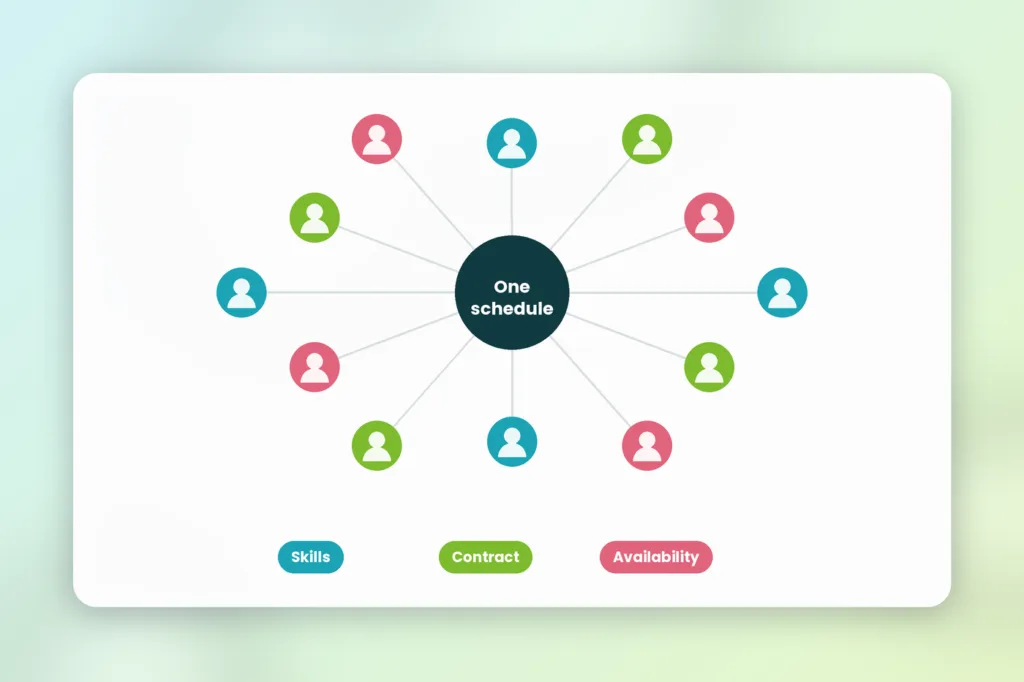
Track three layers for every trainer: skills, contract and availability. Skills show what they can teach. The contract shows the terms they work under. Availability shows when they can work. A session is ready to publish only when all three layers clear.
The table below illustrates the functioning of each layer.
| Layer | Question it answers | What you record | Review rhythm | Booking rule |
|---|---|---|---|---|
| Skills | Can this person deliver this course? | Courses, level, language, delivery mode, certificate expiry | Monthly for expiry, quarterly for levels | Book only trainers cleared for the course |
| Contract | On what terms do they work? | Contract type, rates, cancellation terms, IP and data clauses, insurance | Quarterly and at renewal | Book only trainers with a signed, current agreement |
| Availability | Are they free and willing? | Open windows, blackout dates, held and booked days | Weekly | Always book a primary and a backup |
Since each is changing at its own rate, one spreadsheet sheet is not going to work. For example, availability changes once per week, but the agreement only changes once or twice a year. Keep the connection between the layers, but update each independently.
Why the method works: It transforms the question, “Is this trainer right for this session?” into three true-or-false questions anyone on your staff can ask, not just the one with the best memory.
How To Develop The Trainer Skills Matrix So It Stays Updated?
Construct a concise matrix by using three levels for each skill and one expiry date for each certificate. The reason is that a complicated matrix is outdated after just one month.
Here are the three levels:
- Lead: delivers the course alone.
- Support: delivers along with the Lead.
- Shadowing: learns how to deliver, then becomes Support.
Next, follow these steps:
- Enumerate all courses, grouping similar ones into Skill Families.
- Rate each Trainer based on their proficiency at one of the three levels in each course.
- Include the language used, delivery type (face to face or virtual) and geographic region.
- Document all certifications with their respective expiry dates.
- Include last observed date, and observe again at a certain frequency.
Finally, make the matrix your single source of truth when it comes to booking. The alternative means relying on the coordinator’s memory. Here is a quick example. If you have a safety course which requires a valid instructor certification, with expiry date of June 30, your booking process must ensure that you do not book any more sessions of the course after that date. This should not be an issue until the morning of that day.
SimpliTrain is our very own software. Take its mention accordingly. You can see the details on our training management features page.
The skill matrix becomes useful when it prevents a poor assignment. It won’t be updated if all it does is document skills and doesn’t prevent things.
What Contract Should You Have With Different Kinds of Trainers?
Contract based on tiers not people. The Core Trainers are responsible for the bulk of your core business and therefore require a more committed contract. The Reserve Trainers help in filling gaps and hence require an easier per session contract.
Here is a good starting point.
| Tier | Who they are | Typical contract | Commitment | Booking rule |
|---|---|---|---|---|
| Core | Deliver most flagship or accredited courses | Employment or long-term agreement | Set days or minimum volume | First choice for flagship sessions |
| Regular | Deliver steadily as associates | Framework (associate) agreement | No guaranteed work; right to decline | Offered sessions in rotation |
| Reserve | Specialists and cover trainers | Per-session agreement | None either way | Called for peaks, niche topics and backup |
But this is only half the story since the label that is put on the contract. The IRS has stated that a mere contract is insufficient to determine whether or not a worker is an employee or independent contractor (IRS guidelines for employees vs. contractors). UK guidance for training businesses makes the same point: status turns on what happens day to day, such as control, substitution and how closely a trainer joins your team (Sprintlaw’s guide for UK training providers, September 2026).
So if you want someone to work set days and report into your line management, place them in the core category. Don’t refer to them as an associate. That is general information, not legal advice. The rules vary per country and state.
The agreement template should cover:
- Scope: courses, formats, and who provides the venue and equipment.
- Rates and expenses: daily or session rates, and expenses you will cover.
- Cancellation policy: notice period and cancellation charges.
- Substitution policy: who can substitute, and how you approve the substitution.
- Confidentiality and data handling: which delegate data the trainer can access.
- Ownership of the materials: slides, workbooks and recordings.
- Insurance and liability: insurance coverage of each trainer.
- Non-solicitation clause: specific, limited in time and scope.
Also, make sure you have written promises about availability. The same Sprintlaw guide advises you not to rely on any verbal agreements about dates or exclusivity. It would be hard to prove those months down the road.
Over-managing associates is the silent danger. Client work requires precision, and so coordinators come up with new policies. Each policy brings associates closer to being considered employees.
How Do You Track Trainers’ Availability Without Overbooking Them?
Make each trainer state on day one open, held, or booked, and allow only one system to modify them. Open means the trainer is free. Held means you have penciled them in while a client decides. Booked means both sides have confirmed.
Then add four simple rules:
- Expiration occurs automatically, for example, after 48 hours.
- Collect blackout dates on a monthly basis, rather than per request.
- Record the time zone for every virtual session.
- Name a backup before you publish any session.
The last rule matters most. A named back up transforms the cancellation into a shift trade, instead of a panic situation. For example, SimpliTrain allows you to add two instructors, a primary and a secondary one, at the time of setting up a course and regards trainer allocation as mandatory so that there is always an allocated trainer for the session. Learn more about our management of instructors page and our training scheduling page.
Trainers’ hold is a silent factor behind the double bookings. A non-expired “maybe” creates trouble for a trainer and makes people lose faith in their schedule.
How Can A Weekly Trainer-Ops Workflow Look Like?
A proper workflow requires less than an hour per week and identifies issues early. Here is a workflow you can replicate.
- Monday: look at the next four weeks for meetings where there is no trainer or no back up.
- Wednesday: delete the outdated holds and verify open requests.
- Friday: look at cancellations, exchanges, last minute changes and identify the reason behind them.
- Month: check for the expiry dates of certificates and gather blackout dates.
- Quarter: look at the tiers, contracts and trainer feedback and reclassify members accordingly.
Since the workflow is short, people actually do it. In addition, the Friday analysis gives you the opportunity to adjust your policies based on the data you receive.
It is better to be consistent than to be intense.
When Is It Time For A Training Management System, And What Are Its Features?
You have outgrown spreadsheets when two coordinators edit the same sheet, or when you learn about a problem after the session. In our view, that point often arrives near 50 trainers. A training management system (TMS) becomes relevant at this point.
Whichever method you use, look for the following five criteria:
- Skills and certificate expiry on each trainer profile.
- A primary and a backup instructor on every session.
- Clear states for open, held and booked days.
- Role-based access control, so that freelancers can access just their sessions.
- Cancellations, swaps, and trainer load reporting.
Some of these features are supported by SimpliTrain. They include main and alternate instructors, instructor role with session-level access and instructor portal that tracks rosters and attendance. We might be biased so try these out yourself in our demo against your checklist. If you manage a training provider company, take a look at our page for professional training companies.
Don’t buy software for something you haven’t mapped out yet. Write down your tiers, states, and weekly schedule. Then you can judge any tool on how well it enforces them.
Your next step
Pick your 10 busiest trainers today. Fill in their skills, contract and availability using the three layers above. That one hour will show you where your network leaks. Then see how a TMS handles it: explore SimpliTrain’s training management features or book a demo and bring your trainer list.
FAQs
1. When do spreadsheets stop working for managing trainers?
Spreadsheets stop working when more than one coordinator edits them, or when you learn about a problem after the session. According to us, this happens when you have about 50 trainers. There will be repeated double bookings, certificate expirations, and delayed response to clients’ queries. This indicates that the network is beyond manual management.
2. Can I just call a trainer self-employed in the contract?
No. The label shows intent, but regulators look at the real relationship. The IRS considers behavioral control, financial control, and the relationship between the parties. The UK test is based on control, substitution, and day-to-day operations. Regulations vary, so consult a professional before making any determination.
3. Who owns the course materials that a freelancer creates?
Depends on your contract, so do not assume ownership. Ensure that any new materials go to your company in writing. Then license any pre-existing materials the trainer brings to the job. Also state who may edit, record and reuse the content.
4. How many backup trainers are needed per session?
Provide at least one backup trainer per each session. In case of long programs or accredited training courses, provide a backup trainer who possesses the same credentials as the lead trainer; otherwise, the backup will not be able to take up the role smoothly. Moreover, provide the backup with access to the list and training materials in advance.
5. How frequently should you assess the qualifications and certifications of trainers?
Assess certification expiry date monthly and level of qualifications quarterly. Also check a trainer’s profile in case of negative reviews or new course introduction. Keep the expiry dates in the trainer’s profile, so that you are warned prior to the session, not after.
6. What should a contract for a freelance trainer contain?
Scope, remuneration, cancellation policies, substitution policies, confidentiality and data protection policies, intellectual property rights, liability and limits on solicitation of customers.