





Introduction
A blended learning approach combines instructor-led training (ILT) with digital learning experiences to create a structured, flexible, and engaging training journey. When designed correctly, it allows organizations to deliver consistent learning at scale while maintaining the human interaction that makes training effective.
However, many companies struggle with coordinating schedules, managing multiple learning formats, and ensuring learners stay engaged throughout the program. Without proper planning, blended learning can quickly become disorganized.
This guide explores how organizations can successfully combine ILT and digital learning without creating operational chaos.
Today’s workforce expects learning to be flexible, continuous, and accessible. Blended learning addresses all three requirements.
Industry Snapshot
- 74% of employees say they aren’t reaching their full potential due to a lack of development opportunities.
- Organizations with strong learning cultures are 92% more likely to innovate and 52% more productive.
What Is a Blended Learning Program?
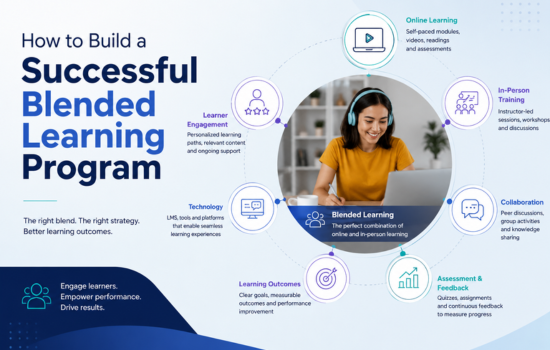
A blended learning program integrates multiple training methods into a single learning experience. Rather than relying exclusively on classroom instruction or online modules, it combines the strengths of both approaches.
Typically, a blended learning program includes:
- Digital pre-learning modules
- Instructor-led training sessions
- Virtual instructor-led training (VILT)
- Assessments and quizzes
- Microlearning reinforcement
- Performance support resources
Each component serves a specific purpose in the learner journey. Digital learning delivers foundational knowledge, while ILT training focuses on discussion, practice, coaching, and real-world application.
The result is a more engaging and effective learning experience than using a single training format.
Why Organizations Are Moving Toward Blended Learning
Traditional training programs often require employees to spend entire days away from work. While classroom sessions remain valuable, they can be expensive, difficult to coordinate, and challenging to scale across multiple locations.
Digital learning solves some of these challenges by offering flexibility and accessibility. However, it often lacks the interaction and personalized feedback that learners receive during instructor-led training.
Blended learning bridges this gap by combining flexibility with human engagement.
Organizations benefit from:
- Improved learner engagement
- Better knowledge retention
- Reduced training costs
- Greater scalability
- More efficient use of instructor time
- Faster employee onboarding
For modern staff training programs, blended learning has become the preferred model because it balances learning effectiveness with operational efficiency.
“The goal isn’t to replace instructor-led training. It’s to use it where it creates the most impact.”
By the Numbers
According to Brandon Hall Group research:
- Organizations using blended learning report 34% higher learner engagement.
- Blended programs generate significantly stronger knowledge retention than single-format training.
- Employees acquire skills faster when learning is delivered through multiple modalities.
The Role of Instructor-Led Training in a Blended Program
Despite the rise of digital learning, instructor-led training remains one of the most effective ways to develop complex skills.
ILT training is particularly valuable when learners need:
- Hands-on practice
- Real-time feedback
- Group discussions
- Role-playing activities
- Problem-solving exercises
- Coaching and mentoring
Rather than replacing ILT, blended learning uses it strategically.
Instead of spending valuable classroom time delivering basic information, learners complete foundational digital content beforehand. Instructors can then focus on application, discussion, and practical exercises during live sessions.
Digital learning builds knowledge. ILT builds confidence, decision-making, and real-world application.
Why ILT Remains Essential
Research shows learners retain information more effectively when they actively discuss, practice, and apply concepts rather than passively consume content.
Studies suggest experiential learning can improve retention rates by up to 75%.
Common Challenges in Blended Learning Programs
While the concept sounds simple, execution can be complicated.
Many organizations encounter problems such as:
Poor Training Scheduling
One of the biggest obstacles is coordinating live sessions alongside self-paced learning.
Employees may complete digital modules at different times, making it difficult to schedule meaningful instructor sessions.
Without effective training scheduling, learners often arrive unprepared, causing instructors to spend valuable time reviewing content instead of facilitating practice.
Disconnected Learning Experiences
Many programs feel like separate training activities rather than one cohesive experience.
For example:
- The eLearning module covers one scenario.
- The ILT session discusses another.
- Reinforcement content introduces unrelated concepts.
This lack of continuity confuses learners and reduces knowledge retention.
Technology Overload
Employees often need to navigate multiple platforms, including:
- Learning Management Systems (LMS)
- Virtual meeting tools
- Assessment platforms
- Content libraries
Without proper training software management, learners can become frustrated and disengaged.
Reality Check
Training Industry research indicates that L&D teams spend nearly one-third of their time managing logistics, learner communication, and scheduling.
Common causes of blended learning failure include:
- Poor scheduling
- Disconnected content
- Technology overload
- Lack of management support
Most blended learning failures are operational challenges rather than content problems.
How to Build a Successful Blended Learning Program
1. Start with Clear Learning Objectives
Every training initiative should begin with a clear understanding of the desired outcomes.
Ask questions such as:
- What skills should employees develop?
- What behaviors should change?
- What business goals will the training support?
These objectives guide decisions about which content should be delivered digitally and which should be addressed through instructor-led training.
2. Use Digital Learning for Knowledge Transfer
Not every topic requires a live instructor.
Digital learning works best for:
- Policies and procedures
- Compliance information
- Product knowledge
- Process training
- Foundational concepts
By moving informational content online, organizations free up classroom time for higher-value learning activities.
3. Reserve ILT for Practice and Application
Live training sessions should focus on activities that benefit from human interaction.
Examples include:
- Simulations
- Case studies
- Role-playing
- Peer collaboration
- Coaching conversations
This creates a more engaging and productive learning experience.
4. Create a Structured Learning Journey
Successful blended learning programs feel like a single experience rather than a collection of unrelated activities.
A typical sequence may look like:
Step 1: Digital pre-learning
Step 2: Instructor-led workshop
Step 3: Practical assignment
Step 4: Digital reinforcement
Step 5: Assessment and feedback
This structured flow helps learners understand how each component contributes to their development.
5. Invest in Training Software Management
Technology plays a critical role in blended learning success.
Modern training software management solutions help organizations:
- Schedule sessions automatically
- Track learner progress
- Manage instructor availability
- Send reminders and notifications
- Generate training reports
- Measure learning outcomes
A centralized training platform reduces administrative effort and ensures a smoother learner experience.
Technology Impact
Organizations that adopt integrated training management systems report:
- Up to 50% reduction in administrative workload
- Improved learner tracking and reporting
- Higher training completion rates
As training programs scale, manual administration quickly becomes a bottleneck.
Best Practices for Training Scheduling
Scheduling is often the hidden challenge behind successful blended learning.
To improve training scheduling:
Keep Sessions Short
Instead of full-day workshops, consider shorter sessions spread over several days or weeks.
This improves knowledge retention and minimizes disruption to work schedules.
Schedule Around Workflows
Training should fit naturally into employee schedules whenever possible.
Avoid scheduling critical learning activities during peak business periods.
Use Automated Scheduling Tools
Manual scheduling becomes increasingly difficult as programs grow.
Training management software can automate:
- Session booking
- Calendar invitations
- Attendance tracking
- Waitlist management
This significantly reduces administrative complexity.
Effective training scheduling directly impacts learner participation and completion rates.
For deeper insights, read: Transforming Instructor-Led Training with Automation and Intelligent Scheduling
The Future of Blended Learning
The next generation of blended learning programs will be driven by technology and personalization.
Emerging trends include:
AI-Powered Learning Paths
Artificial intelligence can recommend personalized content based on learner performance and skill gaps.
Adaptive Learning Experiences
Training programs will automatically adjust based on individual progress and learning needs.
Integrated Training Platforms
Modern training software management systems will continue to bring scheduling, content delivery, assessments, and reporting into a single platform.
These innovations will make blended learning more efficient, scalable, and impactful.
Conclusion
Blended learning is no longer simply a trend, it has become a strategic approach to workforce development.
By combining instructor-led training with digital learning, organizations can create flexible, engaging, and scalable staff training programs that deliver measurable business results.
The key to success lies in thoughtful design, effective training scheduling, and strong training software management. When digital content, ILT training sessions, and reinforcement activities work together seamlessly, employees learn faster, retain more information, and apply their knowledge with greater confidence.
Organizations that embrace a well-structured blended learning strategy will be better positioned to develop future-ready workforces while maximizing the value of every training investment.
FAQ
What is a blended learning program?
A blended learning program combines instructor-led training (ILT) and digital learning into one structured training experience.
What are the benefits of blended learning?
It improves learner engagement, knowledge retention, flexibility, and training scalability.
Why is instructor-led training important in blended learning?
ILT provides hands-on practice, real-time feedback, and interactive discussions that digital learning cannot fully replicate.
How does training software help manage blended learning programs?
Training software streamlines scheduling, learner tracking, reporting, and communication across training activities.
What is the biggest challenge in blended learning?
Maintaining a seamless learning experience across multiple formats while ensuring learners stay engaged and on track.