What does data-driven decision-making look like in a training program?
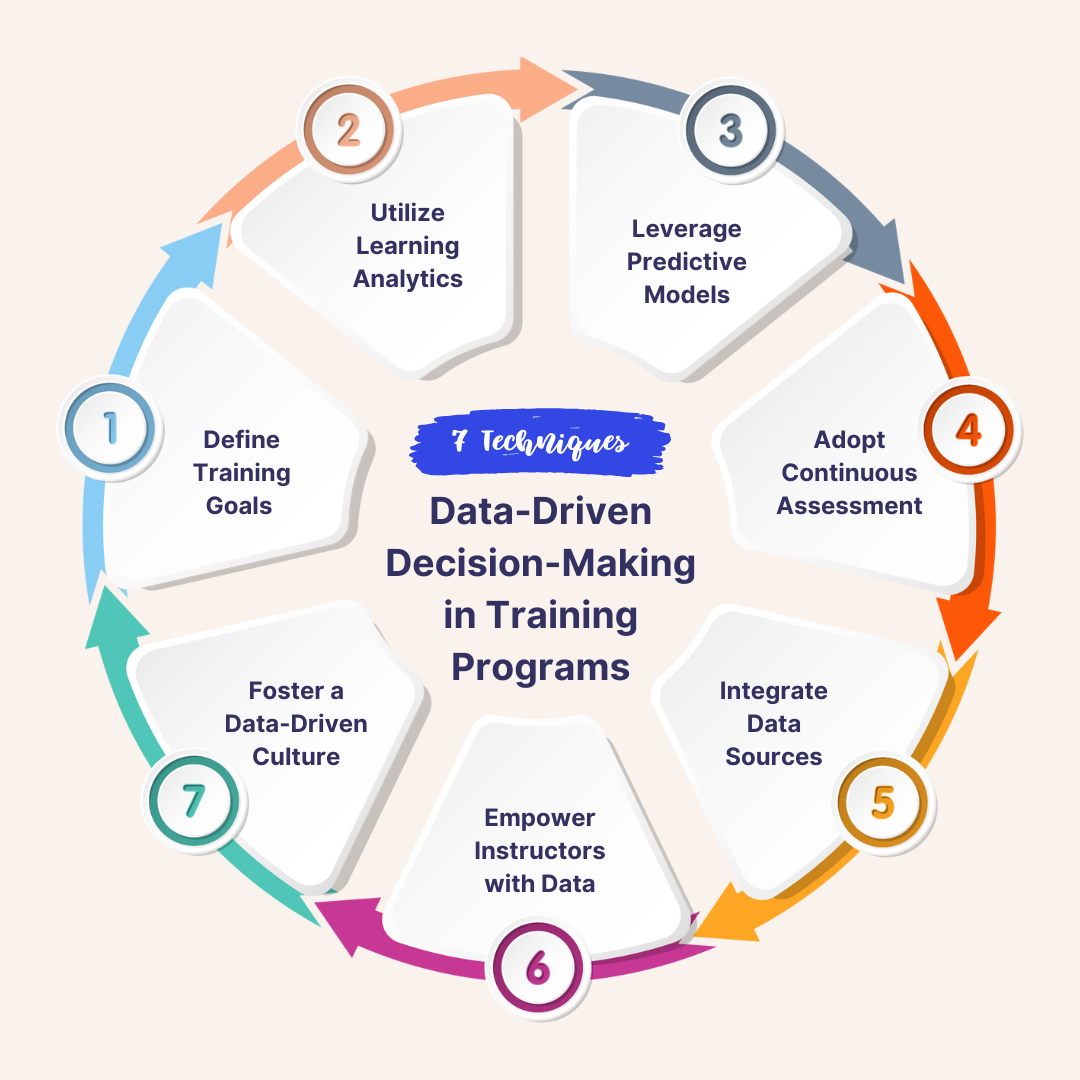
Data-driven training isn’t a single tool, it’s a seven-step cycle that starts with clear goals and ends by feeding what you learn back into the next round. The techniques move from defining what success looks like, to collecting and analyzing data, to actually changing how training runs based on it.
It starts by defining training goals clearly enough to measure against, then using learning analytics to see how people are actually progressing against those goals. From there, predictive models flag likely dropout points or skill gaps before they show up in performance reviews, giving L&D teams a chance to step in early rather than after the fact.
Continuous assessment replaces the single end-of-course quiz with ongoing checks, and integrating data sources means attendance, quiz scores, and completion rates live in one place instead of scattered across spreadsheets. The last two techniques are less technical and more cultural: giving instructors direct access to learner data so they can adjust in real time, and building a culture where teams actually act on what the data shows instead of filing it into a report no one reads.
Why does this need to be a cycle, not a one-time project?
Training goals shift as the business does, which means the data behind them goes stale fast if nobody revisits it. Treating this as a loop, ending back at defining goals rather than stopping after one round of analysis, is what keeps the whole system useful past the first quarter.
SimpliTrain’s built-in learning analytics and AI-powered assessments cover the data collection side of this cycle automatically, so the harder work of building a data-driven culture doesn’t get stuck behind a reporting bottleneck.